
What Is Fascia, and Why Does Nobody Explain It Right?
Most people have never had fascia explained in a way that actually makes sense. They've heard the word. Maybe a foam roller video mentioned it. But ask someone to describe what fascia actually is and why it matters, and most people, including a lot of practitioners, would struggle. Here's how we explain it in the clinic, with a model built out of candy!
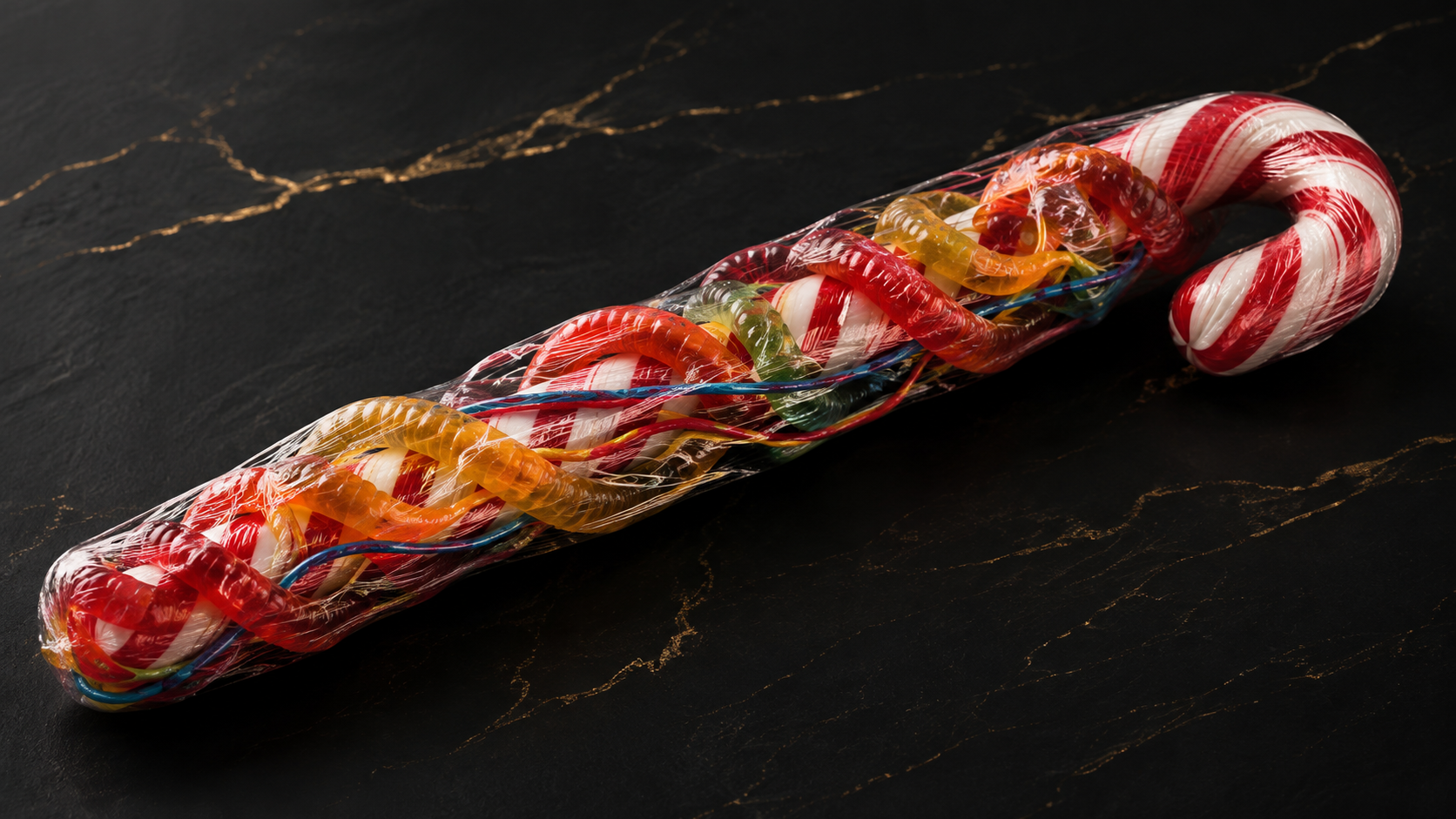
Imagine the bone is the candy cane. Rigid, simple, the frame everything else hangs off of. Muscle is the gummy worms. Wrapped around that frame, doing the actual work of moving you. Arteries, veins, and nerves are the string licorice. Red for arteries, blue for veins, yellow for nerves — the wiring and plumbing keeping everything supplied and communicating.
Here's the part almost nobody explains: wrap each of those pieces individually in plastic wrap. Then wrap the group of them together. Then wrap the whole thing, as one unit, one more time. That's fascia. Not one layer. Every layer, individually and collectively, holding the shape of everything underneath it.Why This Actually Matters for You
Most treatment stops at the muscle, the gummy worm. Massage works the tissue you can feel. Stretching lengthens what's tight in the moment. Both can feel good. Neither touches the plastic wrap holding everything in the wrong shape to begin with.Here's what that looks like in real life: an old ankle sprain nobody fully rehabbed. A rib jarred once that never quite reset. A hip that's been compensating for years because something upstream isn't loading right. None of that shows up as "the problem" on an X-ray or in a five-minute exam. It shows up as tightness somewhere else entirely, because the wrap is pulling.
That's why an adjustment can feel great and not hold. It moved the candy cane. It didn't touch what's still pulling the candy cane back to the same spot. For anyone training on a clock, chasing a season, a qualifying window, a comeback, this isn't academic. An issue only treated at the muscle level tends to come back, usually at the worst possible time, because the actual driver was never addressed. You don't get infinite training days to spend rediscovering the same injury.
What We Actually Do About It
At RolfPros, we don't ask where it hurts and go straight there. We run a movement screen first, a Functional Movement Screen, to find out where your body is actually compensating, not just where it's complaining. Then we treat the fascia layer directly, working it systematically through the Recover Right® 5-Phase System (Assess, Restore, Stabilize, Perform, Prevent), and screen again before you leave so you see the change instead of getting told about it.
This isn't a generic 10-session script everyone gets, either. Most Rolfing is exactly that, the same sequence regardless of what's actually wrong with you. Ours is built around what your specific body is doing, because two people with the same complaint can have completely different wrap problems.
If You've Tried Everything Else If you've done the massage, the chiropractic adjustments, the stretching routine, and something still isn't holding, this is probably why. You've been treating the gummy worm. Nobody's touched the wrap. We don't treat where it hurts. We treat what made it hurt. If that's you, book your assessment. We'll run the screen, show you what we find, and build a plan around your actual pattern, not a generic one.