
Should You Train Through Pain or Change Your Workout?
Halfway through a run, your knee starts to ache. It settles by dinner, then returns on the next run. You have an event on the calendar and don't want to lose training time. Should you keep going, change the session, or take a break?
Start with what the pain is doing. If it grows sharper, changes your stride or form, or leaves you worse later, stop the movement that's provoking it. If discomfort is mild and doesn't build, you may be able to ease back or choose a different activity while you monitor it. Severe pain, swelling, a sudden injury, or trouble putting weight on the area calls for medical evaluation. The American Academy of Orthopaedic Surgeons recommends seeing a doctor if pain is severe, you cannot move or bear weight, or symptoms persist.
What to notice before the next workout
Think about when it starts, which movements bring it on, and whether it settles after you stop or returns the next morning. Did you recently add mileage, speed work, or heavier lifts? Are you shortening your stride or favoring one side? You don't have to diagnose yourself. These details help you and a qualified professional make a better decision than repeating the same workout and hoping for a different result.
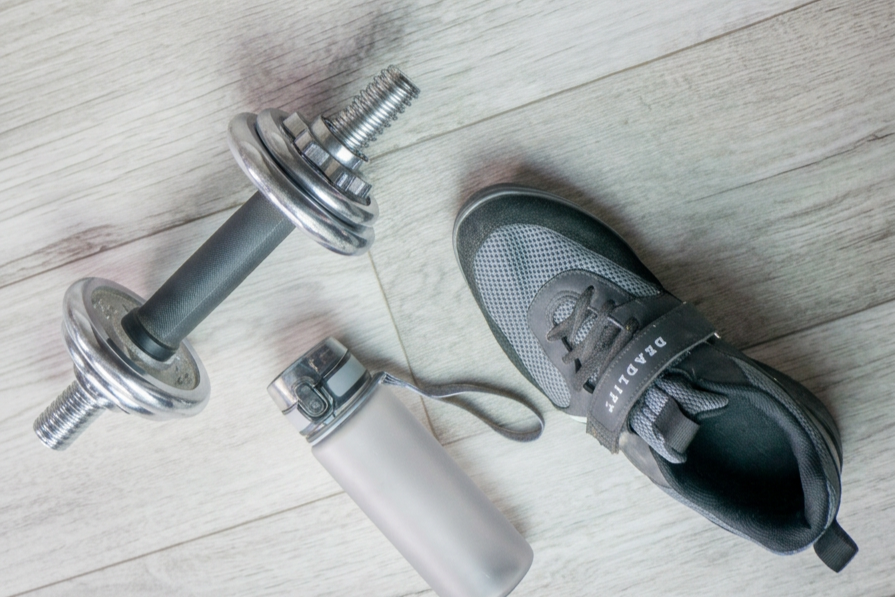
What training around an issue looks like
Sometimes changing one demand lets you keep moving while you get the problem checked. A runner might skip hills that aggravate a symptom; a lifter might leave out an overhead press that hurts while continuing movements that feel comfortable. The specifics depend on the person and symptoms. If pain keeps returning as soon as you resume your usual training, it's time for an assessment rather than another round of trial and error.
Whatever it is, the way you tell your story online can make all the difference.
What a movement assessment can tell us
At RolfPros, I start by listening to when the issue began and how you've been training. Then I watch you move as part of your initial movement screen. That tells us what's compensating, what's restricted, and whether the issue you're feeling is the source or just the symptom showing up downstream. If you shift away from one leg during a squat, for instance, that's something we can explore as we consider what to modify. The screen shows how you're moving today and our Recover Right approach uses those observations to decide what to examine more closely and what may need to change in your training. From there, the decision usually splits into three lanes:
Train through it: The restriction isn’t causing the symptom, and normal loading won’t undo our repairs. Go full speed.
Train around it: If the pattern is real, adding more load now harms recovery. This isn’t resting — it means changing specific movements while keeping everything else at full intensity.
Fix the cause first, then load it: Training on top of a significant restriction teaches your body to keep compensating, making correction harder. Most issues don’t require stopping completely, but the ones that do must be stopped honestly, not pushed through.
Rest isn't a plan, it's an absence of one. It doesn't fix what's driving the issue, it just removes the loading that was making it obvious. The pattern is still there when you come back to training, which means you're not recovered, you're just quiet for a while. On a real qualifying timeline, quiet isn't the same as fixed. You need to know which of the three lanes you're actually in, not just whether today's training feels okay.
When rest belongs in the plan
A new sprain or other acute injury may need protection and rest before a gradual return. Rest is useful in that situation. When the same ache returns every time training resumes, time off alone may not tell you what to change. Pay attention to what happens when symptoms appear and get the right assessment before pushing the load back up.
If the same issue keeps interrupting your training, book a Recover Right Assessment with us in Greenwood Village, Colorado. We'll look at how you move and talk through what your next steps should be.